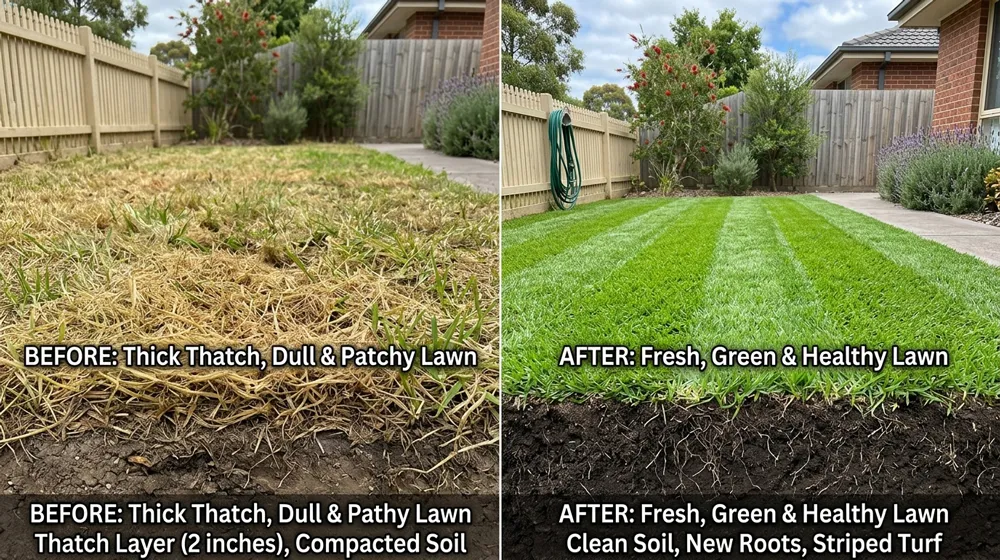
Thatch build-up is one of the hidden causes of patchy, unhealthy lawns across South East Melbourne. In suburbs like Pakenham, Narre Warren, Berwick, Cranbourne, and Officer, the combination of fast-growing Kikuyu and Couch grasses with heavy clay soils often leads to excessive thatch layers. This can suffocate your lawn, reduce water penetration, and create perfect conditions for pests and diseases.
Understanding when and how to dethatch your lawn properly is essential for maintaining a thick, green lawn. Here’s our complete local guide for South East Melbourne homeowners.
Struggling with thatch build-up and patchy grass?
Call us on 0470 514 201 or get your FREE quote today.
What is Lawn Thatch?
Thatch is the layer of dead grass stems, roots, and organic debris that accumulates between the green grass blades and the soil surface. A thin layer (less than 1cm) is actually beneficial as it acts as natural mulch. However, when thatch becomes thicker than 1.5–2cm, it starts causing problems.
Why Thatch Build-up is Common in South East Melbourne
Our local conditions accelerate thatch formation:
- Fast-growing warm-season grasses like Kikuyu and Couch
- Heavy clay soils that compact easily
- Over-fertilising with high-nitrogen products
- Infrequent or incorrect mowing heights
- Poor soil aeration
These issues are very common in new estates in Cranbourne, Officer and Pakenham.
Signs Your Lawn Has Excessive Thatch
- Spongy or bouncy feeling when you walk on the lawn
- Water pools on the surface instead of soaking in
- Brown or patchy areas despite regular watering and fertilising
- Increased pest and disease problems
- Difficulty pushing a garden fork into the soil
Best Time to Dethatch Your Lawn in South East Melbourne
The ideal time is:
- Late Spring to Early Summer (October–December): When Kikuyu and Couch are actively growing
- Early Autumn (March–April): For recovery before winter
Avoid dethatching during extreme heat or cold.
How to Dethatch Your Lawn Properly
1. Manual Dethatching (Small Lawns)
Use a specialised dethatching rake or scarifier rake. Rake vigorously in multiple directions, then collect and remove the debris.
2. Mechanical Dethatching (Medium to Large Lawns)
For best results, we recommend hiring or using a powered dethatcher. This removes thatch more efficiently and evenly.
3. After Dethatching – Recovery Steps
- Collect and remove all debris (do not leave it on the lawn)
- Aerate the lawn to improve soil health
- Apply a light top dressing of sand or compost
- Fertilise with a balanced fertiliser
- Water deeply but infrequently to encourage recovery
For detailed aeration techniques, see our Aeration and Top Dressing Guide.
Prevention – How to Reduce Future Thatch Build-up
- Maintain proper mowing height (never remove more than one-third of the grass blade)
- Avoid over-fertilising with high-nitrogen products
- Core aerate at least once a year
- Regularly top dress with quality materials
- Choose the right grass type for your soil and conditions
Frequently Asked Questions – Lawn Thatch & Dethatching
How thick is too much thatch?
Anything over 1.5–2cm is considered excessive and should be removed.
Can I dethatch my Kikuyu lawn?
Yes, but timing is critical. Late spring to early summer is best for Kikuyu in South East Melbourne.
Will dethatching damage my lawn?
If done correctly at the right time, your lawn will recover quickly and become much healthier. Improper dethatching can stress the grass.
Should I dethatch every year?
Most lawns in our area benefit from dethatching every 1–2 years, depending on thatch levels.
Need Help with Lawn Thatch Removal?
Our team provides professional dethatching, aeration, and lawn renovation services tailored to South East Melbourne conditions.
Call 0470 514 201 or Get Your Free Quote today.
Small Brother Lawn Mowing Service – Local experts helping homeowners maintain thick, healthy lawns across South East Melbourne.